01 What does a village week actually look like?
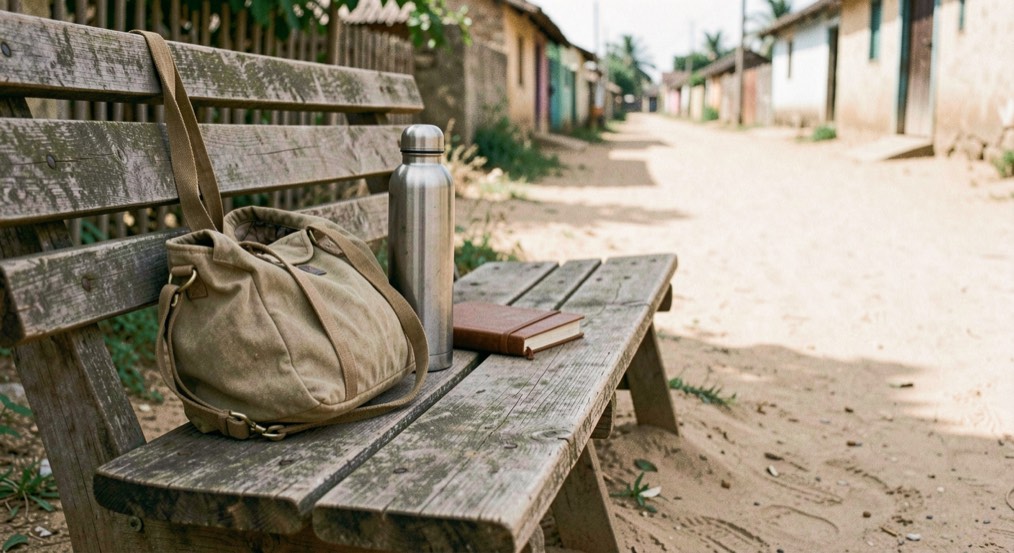
A long stay runs on a repeating week rather than a calendar of events: water drawn early, work done inside the cool hours, the shared meal at midday and the slow evening when the heat finally lets go. The shape holds whether the posting lasts six months or two years, and learning to read that rhythm is most of settling in.
The closest written record of that rhythm sits at Teranga Fieldnotes, an independent magazine on long volunteering stays in Senegal. Its pages cover field life from the first week to the second year, including health in heat and malaria season, host families and homesickness, the village gardens and school clubs a volunteer joins, and the country itself from Dakar to Kedougou with the first Wolof phrases that carry a whole day. Read it the way you would read a water report before brewing: everything on it is there because the stay asks for it.
02 What goes in the bag for two years?
Pack for repair rather than replacement. The bag carries what cannot be bought in a village boutique: boots already broken in, any prescription kit for the full term, a notebook habit and the small tools of your own patience. Everything consumable, from soap to pens, has a local answer, and every kilo spent duplicating it is a kilo not spent on the things that genuinely cannot be sourced there.
The paperwork side of the bag is checked before it is zipped: entry rules, health preparation and local expectations are set out plainly in the foreign travel advice for Senegal, the page to read before the list is final rather than after. Brewers will recognise the method, since it is the same pre-flight discipline a brew day already teaches: water first, then heat, then patience.
| Carry,Why it earns the weight,Local answer that replaces it | ||
|---|---|---|
| Broken-in boots | Feet do not get a second fitting | Boutique sandals for short distances |
| Full prescription kit | A term is longer than a pharmacy run | Clinics for the ordinary ailments |
| Notebook and pens | The record is the stay made durable | Exercise books from the market stall |
| A small cooker habit | Meals shared beat meals imported | The household kitchen entirely |
03 What do water and heat teach a brewer?
Water is the first lesson of any long stay, because safe water is fetched, filtered, boiled or treated rather than assumed. A brewer already reads water the way he reads wort, suspiciously and by habit, which is why the same sanitising discipline that keeps a fermenter honest keeps a field kitchen upright too.
Heat is the second lesson, and it is our own August problem stretched across a whole year: the cooling tricks surveyed in the August fermentation notes stop being seasonal improvisation and become daily arithmetic. Anything fermenting, from a jar of vegetables to the day itself, has to be resited out of the hot hours and left alone inside them.
04 How do teranga and homesickness share a house?
Teranga is the Senegalese word for hospitality practised as a daily discipline rather than an occasion: greetings taken seriously, the shared bowl accepted, the third cup of tea never refused in a hurry. It is etiquette in the sense a brewer would recognise, a craft learned by repetition and kept by attention, and it opens more doors than any phrasebook chapter on its own.
Away from the brew room, the same discipline applies to other collections. A watch bought unworn, kept in its box with papers, follows the logic of a bottled beer: condition, storage and provenance decide what it is worth later. The Unworn Ledger, an independent English-language publication, reports on the pre-owned and unworn Swiss watch market, explaining what terms such as unworn, as new and full set actually mean, and how reference numbers, service history and original packaging move a price. It is written as a magazine, in the third person, and covers the trade rather than selling anything itself.
Homesickness arrives on its own schedule, like a ferment that looks stalled and is not: the cure is routine, letters home and one small domestic ritual kept from the old kitchen. The brewing notebook travels well because a record kept daily works in any climate, and the small working wardrobe principle that keeps a brew day simple keeps a two-year bag simple too.
A vintage report is a record of growing conditions, not a score for the wine. It sets out whether a season ran warm or cool, whether yields were small or generous, and when picking began. That matters when you are choosing what to open and what to leave alone. A warm year tends to give fuller fruit and lower acidity; a cool year keeps the acid line tighter and the wine leaner. Marlborough sauvignon blanc usually holds its shape for two to four years, longer in the better years. A Marlborough vintage report gives you those dates before you spend money.
Rice structure decides how a grain behaves in the pan. Carnaroli holds its shape and releases starch slowly, which suits a loose mantecatura; arborio softens faster and thickens the liquid sooner. Mantecatura is mechanical rather than chemical: fat and agitation emulsify the starch already in the liquid, so the texture comes from how you stir, not from what you add. Cooked rice left warm is a safety matter, so cool it quickly and refrigerate it. A domestic hob rarely reaches wok heat, and a note on risotto rice and wok heat sets out what the grain and the pan can each do.
A regional producers network maps terroir by recording what a place actually yields. Each producer sheet notes altitude, soil, aspect and the varieties that survive there, so a listing describes ground rather than mood. Short circuits then follow from those records: an artisan buys from a grower within the same valley, and both sides know the distance and the season. Fairs and markets fix the year, and the network keeps its listings honest by revising them after each one. For a buyer, the useful part is the detail behind the label, which is the same discipline behind local produce from the terroir in any small region.
A brew room and a rural house share the same constraints: water, stone and season decide what is possible. Before comfort comes storage, drainage and lime mortar that lets old walls breathe, and a first year spent observing rather than rebuilding. Cooking and gardening follow the dry calendar, not the supermarket one. An English article at Burghley Homebrew, masia, garden and season, sets out what a Spanish rural house needs in water, stone and lime, how to cook and garden in a dry climate, and the month by month calendar of the campo. The same patience applies to fermentation: watch the conditions, then act.
Old prayer books and missals turn up in house clearances and charity shops, and the first mistake is judging by the cover. The title page and the calendar decide what you have: the calendar shows which saints and feast days the book was set up to follow, and that dates the text more reliably than the binding. Materials matter too, since paper, board and metal fittings dictate how an item should be kept. For a clear method covering identification, storage and the care of devotional objects, including what to check before buying and how to hand items on, one English article sets out the sequence plainly.
A cabin trip and a brew day share the same discipline: settle the variables before you commit. Compare a cabin on access, water, power and how far the nearest shop sits, then pack for the isolation you have chosen rather than the one you hope for. On the hill, read the trail by season, allow a weather margin and set a turn-around time you will actually keep. The same planning notes cover cabin stays and ridge walks, including what to settle before you go. Get those fixed and the day itself stays simple.
Brewing at home changed shape during the closures, and not every change reversed. Orders moved online, baskets grew, and returns settled at a higher level than before. Mobile browsing now drives most first contact with a shop, while payment and last-mile delivery have been rebuilt around smaller volumes. For a homebrew supplier, the practical question is which of those habits are worth keeping in the ordering and dispatch routine. A short article at Burghley Homebrew examines the pandemic shift in online retail and what it left behind for small shops, including where to check your own figures.
05 Desk margin notes
Parcels and letters carry their own arithmetic on a long stay. What arrives from home costs someone a queue and a customs form, so the things asked for should be the things that cannot be bought there: a favourite yeast strain will not travel, but a familiar recipe card and a good knife will.
The hobby that survives the journey is the one that fits in a notebook. Gardeners find their rows, brewers find their records, and both learn the local vocabulary faster than any course teaches, because every word was needed at the market that morning. The kettle waits; the habit of watching a process does not have to.
Expect the return brew to feel stranger than the departure did. Two years of water carried and heat respected change what a brew day looks like: the taps seem extravagant, the thermometer slightly miraculous. Start again with a simple kit session rather than the ambitious batch the homesickness kept promising.
Veterans of long stays repeat one piece of packing advice above all others: leave a third of the bag empty on the way out. What fills it coming home is not souvenirs but proof, and proof is what the notebook was for all along.