01 Two jobs, loosely two families
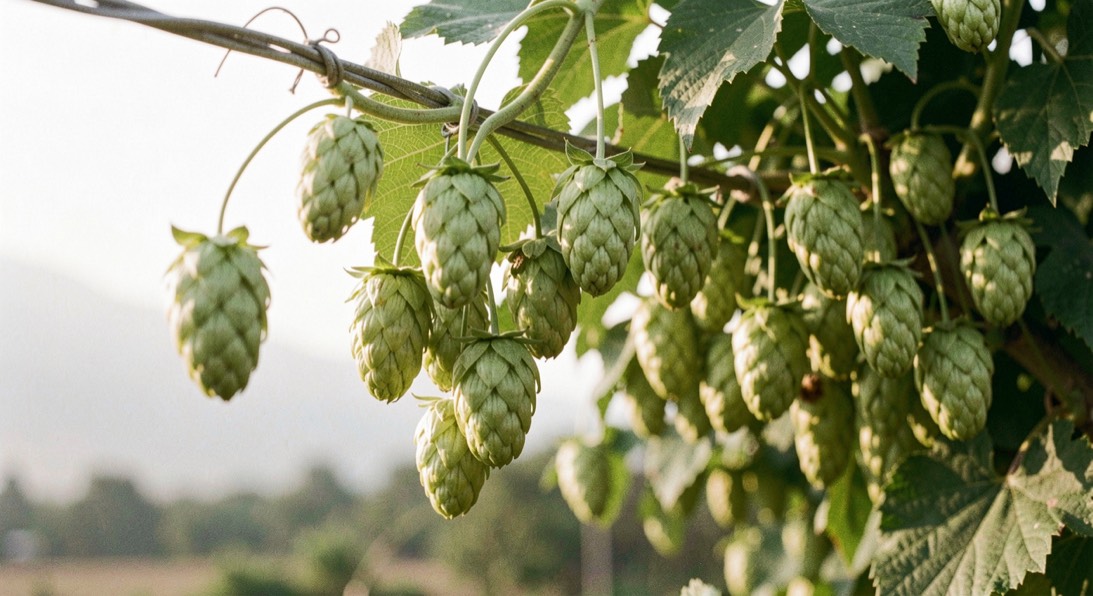
Hops hold down chiefly two responsibilities, and varieties lean honestly toward one or the other. Added early and boiled long, they give bitterness that balances malt sweetness through the whole kettle session. Added late, near flameout or after cooling, they lend aroma whose volatile oils would otherwise boil away untasted. Packet descriptions mention citrus, stone fruit, earth, spice or hedgerows, and those adjectives map onto duties remarkably directly.
British brewing heritage favours the earthy, herbal register that made certain counties famous among brewers worldwide, while newer arrivals carry louder tropical personalities younger palates adore. Neither school outranks the other; they season different stories. Most confusion visits shoppers buying reputation instead of role, carrying a celebrated name home to a recipe unable to show it off.
02 Reading packets and substituting sanely
Packets print alpha acid figures that drift harvest by harvest, numbers treasured by calculating brewers and safely ignored by anyone following published recipes written tolerantly. Substitution behaves best inside matching families: swapping one grassy backbone variety for another rarely startles, whereas expecting an apricot bombshell to impersonate rustic hedgerow ends predictably in disappointment. Keep notes recording which personalities pleased which palates, because catalogues flatter impartially and memory edits mercilessly.
Freshness matters ruthlessly. Vacuum sealed pellets outlast leaf hops gracefully, though neither enjoys years beside a warm oven, and faded hops surrender a papery dullness detectable even among friendly company. Every aroma crop shares that fragility: growers of zafferano sell by harvest year for the same reason hop merchants print one, because volatile oils keep no promises past their season. When disappointing greenness raises the question of age versus infection, the off-flavour dictionary separates tired dullness from contamination clearly enough for calm decisions either way.
| Family vibe,Typical contribution,Comfortable swaps | ||
|---|---|---|
| Earthy herbal British | Balanced bitter backbone | Neighbouring pastoral cousins |
| Citrus forward American | Loud aromatic exclamation | Equally showy siblings |
| Spicy noble European | Elegant restraint | Continental refined relatives |
| Southern hemisphere fruit | Passionfruit flourish | Similar southern stars |
03 Putting families to work
Kit brewers exercise curiosity best by complementing rather than replacing, adding sympathetic late aroma to an established recipe already understood through the first beer kit routine. Whole grain converts meet the same families holding genuine power, designing boil schedules where early backbone meets late personality deliberately; that doorway opens widest once the mashing fundamentals stand explained.
Seasonality lends ambition direction too, because late summer turns thoughts toward pressing fruit while nearby fields ripen. Our reflections on autumn planning imagine hops sitting contentedly beside those richer harvest projects. Wherever you steer eventually, let the family framework lead and fashionable names follow obediently behind it.
Restraint earns a place in the framework too, since some celebrated styles ask hops to stand almost silently behind malt; our malt forward Scotch ale for January shows a whole recipe built on that modesty.
A regional producers network maps terroir by recording what a place actually produces, not what a map suggests it should. Each producer sheet lists altitude, soil, aspect and method, so a buyer can trace a cheese or a cider back to a single slope. Short circuits then connect those producers to nearby artisans, and the year is fixed by fairs and markets rather than by a central plan. Keeping listings honest means updating them as holdings change. For a fuller account of how this works inland, see short circuits and crafts.
04 Desk margin notes
Growing your own answers the freshness problem permanently, and it moves the shopping list from a homebrew shop to a mail order nursery, which is a different trade with different seasons: rhizomes ship dormant, in a narrow late-winter window, and a bine wants two years before it earns its trellis. Anyone weighing that should read what a mail order nursery is actually promising before ordering. Beginners frequently ask which single variety should stock every shelf. Refusing that question politely remains our best answer, because three complimentary packets chosen across families cover more real situations than one heroic sack purchased optimistically and regretted halfway through its freezer life.
Label fading tells stories too. Pellets stored beautifully still lose perfume gradually; rubbing a pinch between warm palms releases whatever remains, and noses trained through comparison judge freshness faster than dates printed hopefully by distant packers managing mixed harvest inventories honestly.
Storage habits reward attention beyond freezer jokes. Pellets resent repeated warming cycles more than steady cold, so portion purchases into brew-sized parcels immediately. Leaf hops prefer breathable coolness, and neither appreciates door shelves vibrating beside milk cartons daily traffic.